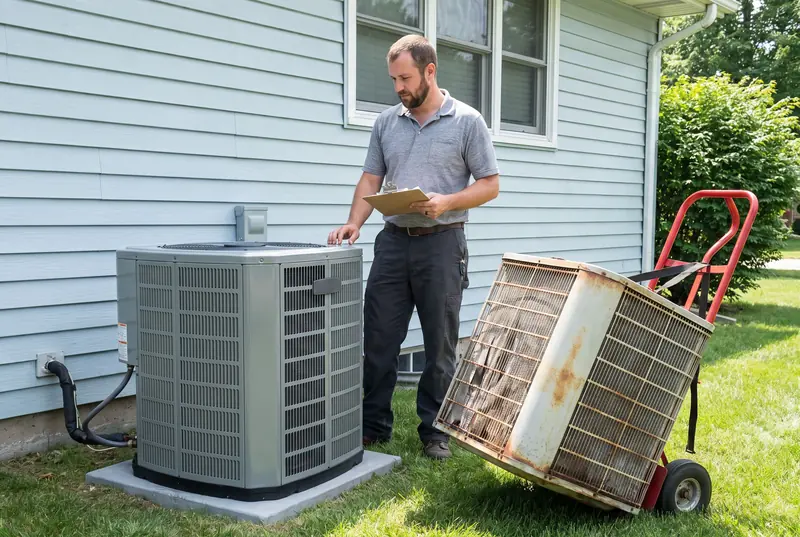
How do you know an HVAC system has crossed the line where repairs stop making sense? In Lakeville, MN, the warning signs usually show up together: a compressor pulling more amps every summer, a heat exchanger flagged during the last inspection, repeated refrigerant top-offs on an R-22 or early R-410A system, and utility bills rising while comfort drops. Our test is straightforward. If a repair costs a meaningful share of a replacement and the equipment is past twelve to fifteen years, the fix is likely to buy months rather than years, and the money goes into technology a generation behind today's SEER2 and AFUE standards.
The repairs homeowners call us about most are AC Repair and Furnace Repair. If something has stopped working, start there.
Warning Signs for HVAC Replacement
Spotting the early warning signs lets you act before the problem gets expensive. Watch for these telltale signs:
- The system runs R-22 or leaks refrigerant faster than top-offs make sense
- Repair invoices arriving more often and each one bigger than the last
- Corrosion and soot marks growing on the equipment
- Hot rooms, cold floors, and sticky air the old system never fixes
- Clanking, buzzing, or roaring every time the system cycles
- A failed compressor or cracked heat exchanger, the repairs that tip the decision
- Your equipment is over twelve to fifteen years old and breaking down more often
- Higher energy bills year after year with no obvious explanation
Early Action Saves Money
What seems like a minor issue today can take out a compressor or heat exchanger tomorrow. If you notice any of these signs, call (507) 203-9146 for a prompt inspection.